Beneath The Surface · 2026
Is Taj Mahal Quartzite or Marble?
How to Tell
Ask five stone suppliers whether Taj Mahal is quartzite and you will get a range of answers. One will tell you it is quartzite, full stop. Another will tell you it is technically a dolomitic marble. A third will say it is close to 99 percent quartz.
They are not all wrong, just describing different slabs.
How to tell what you are actually buying
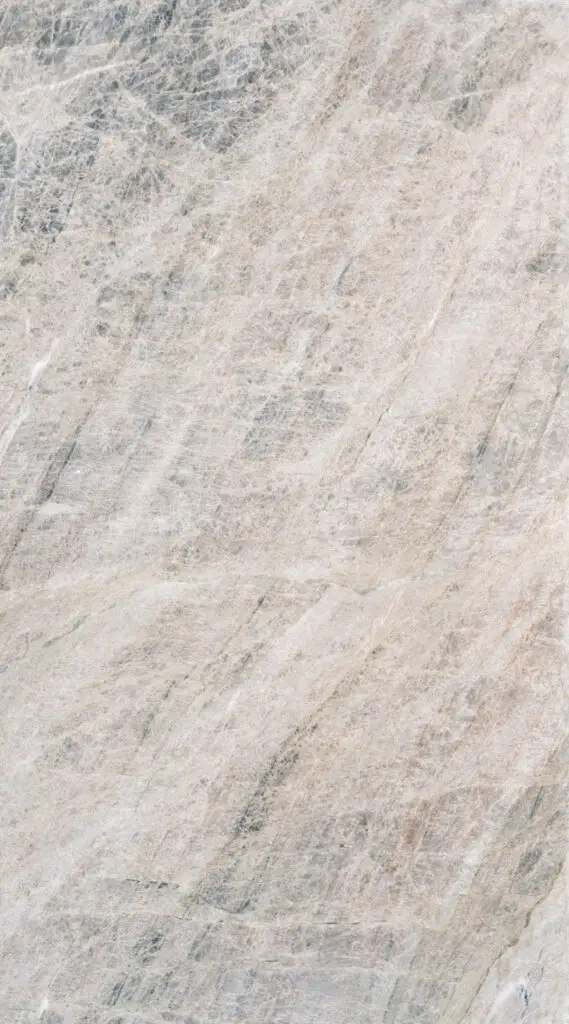
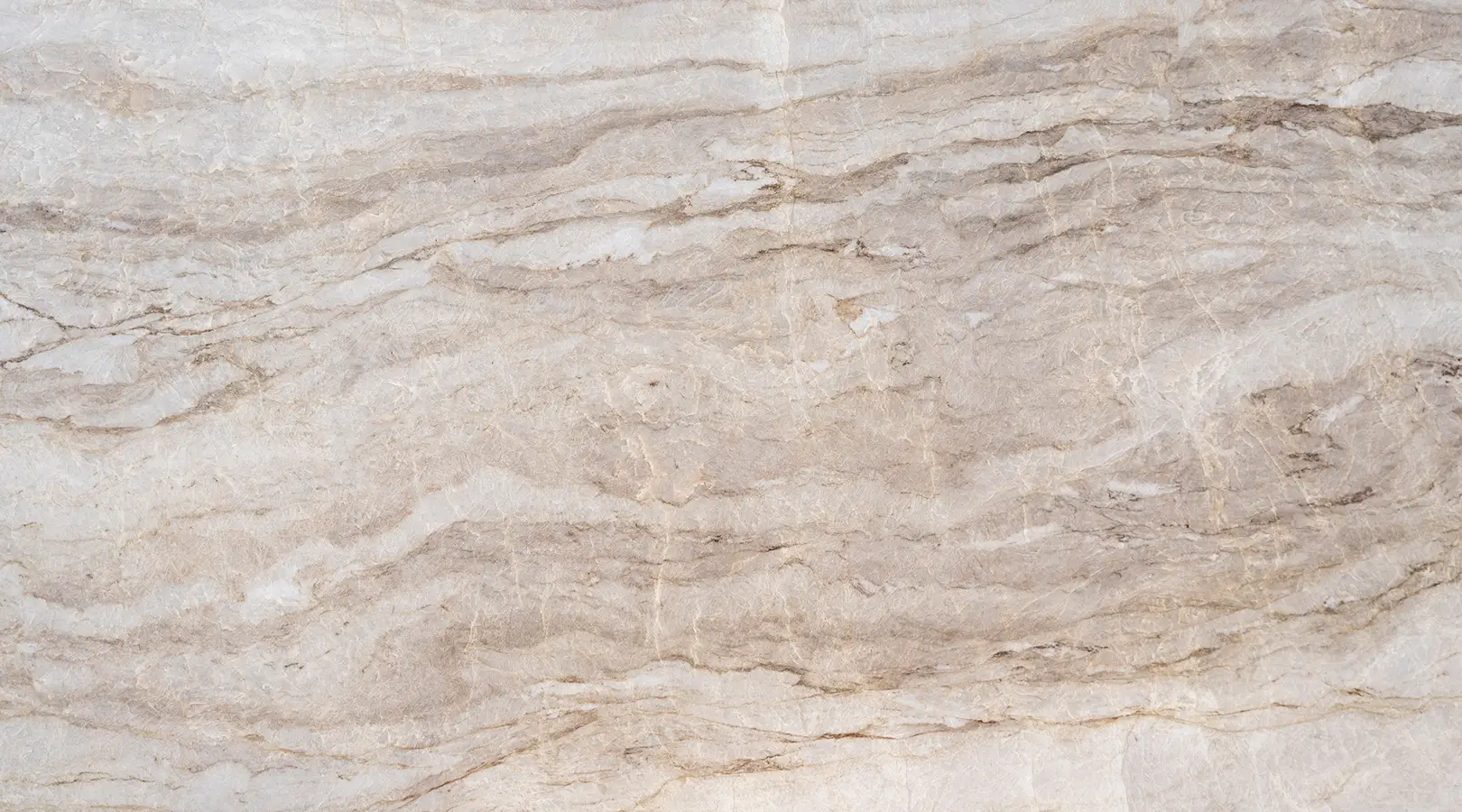
Taj Mahal is a trade name, not a geological classification. It refers to a look: a warm ivory ground with soft gold and taupe veining, quarried in Brazil. Material sold under that name ranges from genuine quartzite, which is among the hardest stone you can put in a kitchen, to dolomitic marble, which behaves much closer to Carrara.
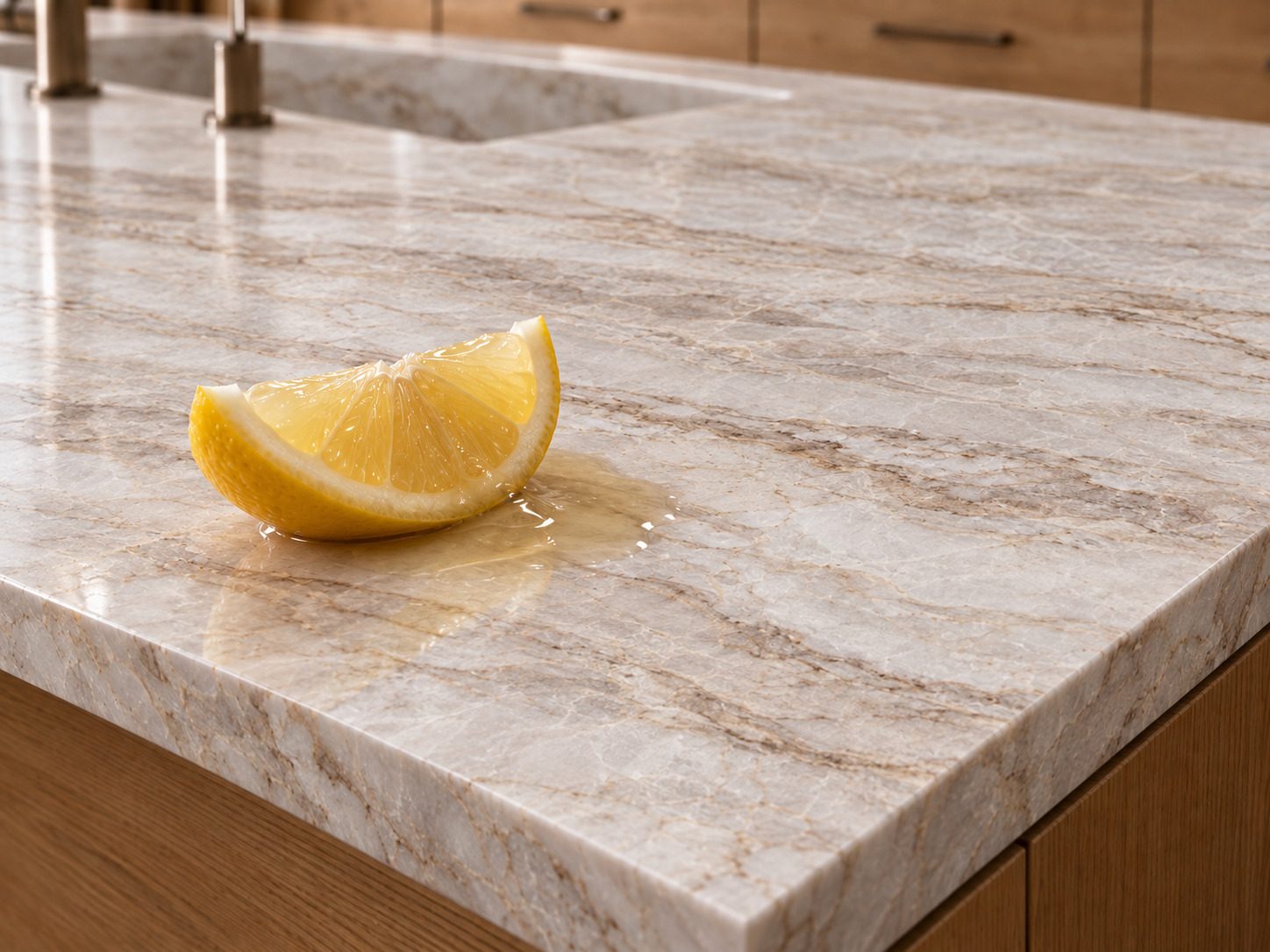
This matters because it explains something people find baffling. One person’s Taj Mahal shrugs off a squeezed lemon. Another’s shows a dull mark within a week. Same name, different rock.
Here is how to tell which one is in front of you.
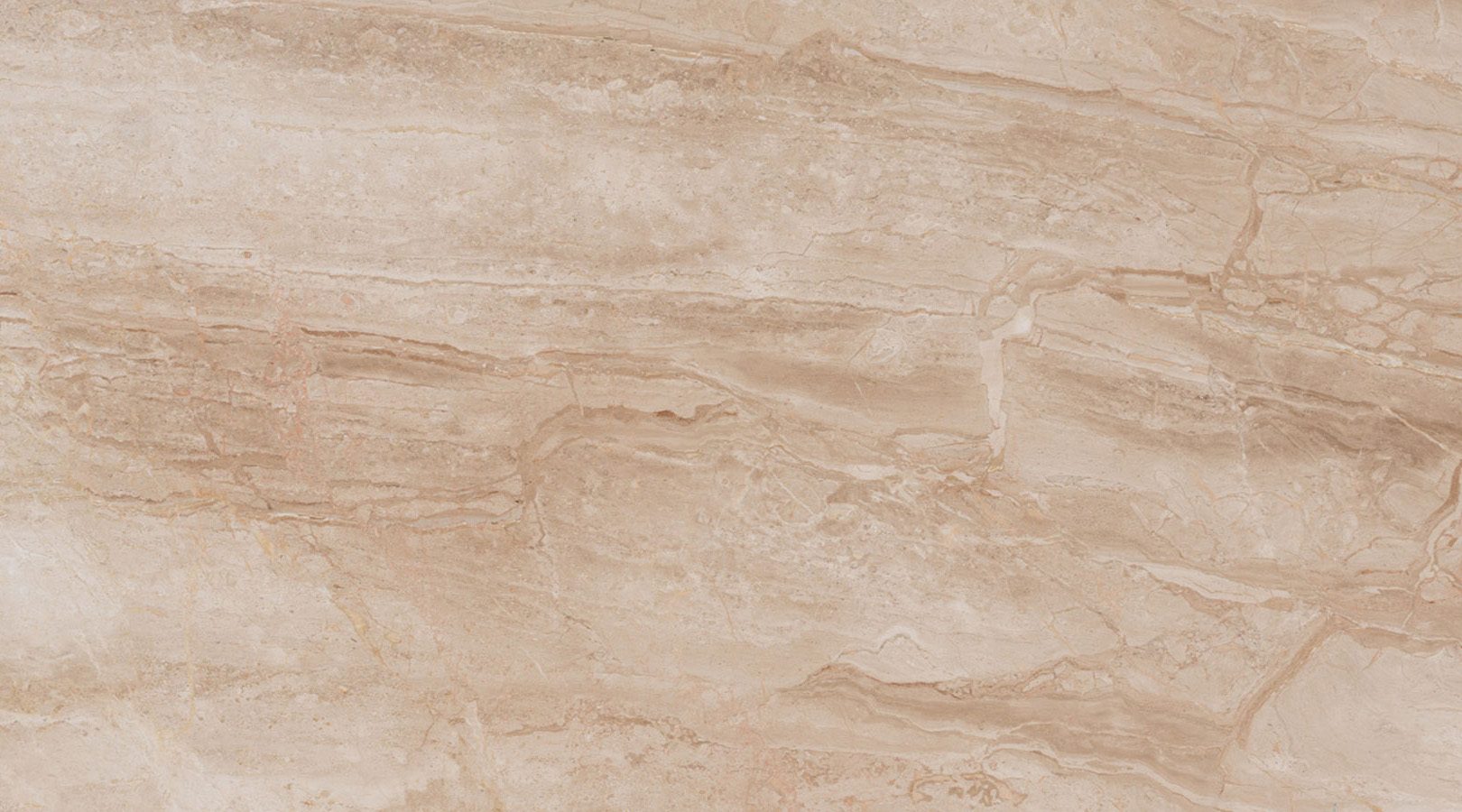
What quartzite and dolomitic marble actually are
Three Ways To Tell Them Apart
Ask your supplier first. A supplier who selects their own material will know, and will tell you. If the answer is vague, the tests below take minutes.
The Glass Test
Quartz is harder than glass. Draw the edge of an offcut firmly across a spare pane or a glass bottle. True quartzite leaves a scratch in the glass.
Marble and dolomite will not — the stone gives way instead.
The Steel Test
Drag a knife edge or a key lightly across an offcut. It should leave nothing on true quartzite. If you get a visible line, you are looking at marble or dolomite.
A fingernail tells you nothing. Nothing in this conversation is softer than a fingernail.
The Acid Test
(1) Put a drop of white vinegar or lemon juice on an offcut and leave it fifteen minutes. (2) Wipe it off and look at the surface at a low angle. True quartzite shows nothing. A carbonate shows a dull spot where the polish has gone.
**Test the offcut, never the installed countertop.** Every one of these leaves a permanent mark on the wrong stone.
Common Questions
Frequently asked questions
01 Is Taj Mahal quartzite or marble?
02 Does Taj Mahal etch?
03 Does Taj Mahal need to be sealed?
04 Is Taj Mahal good for kitchen countertops?
05 Where does Taj Mahal come from?
06 How can I tell if my Taj Mahal is real quartzite?
What we hold
Every slab we sell has been selected by hand, in person, before it shipped. That includes verifying what the material actually is rather than what the
container label says.