
Selections · 2026
Design trends in natural stone — the three materials moving in 2026
Most trend forecasts are opinions.
This is what crossed our floor.
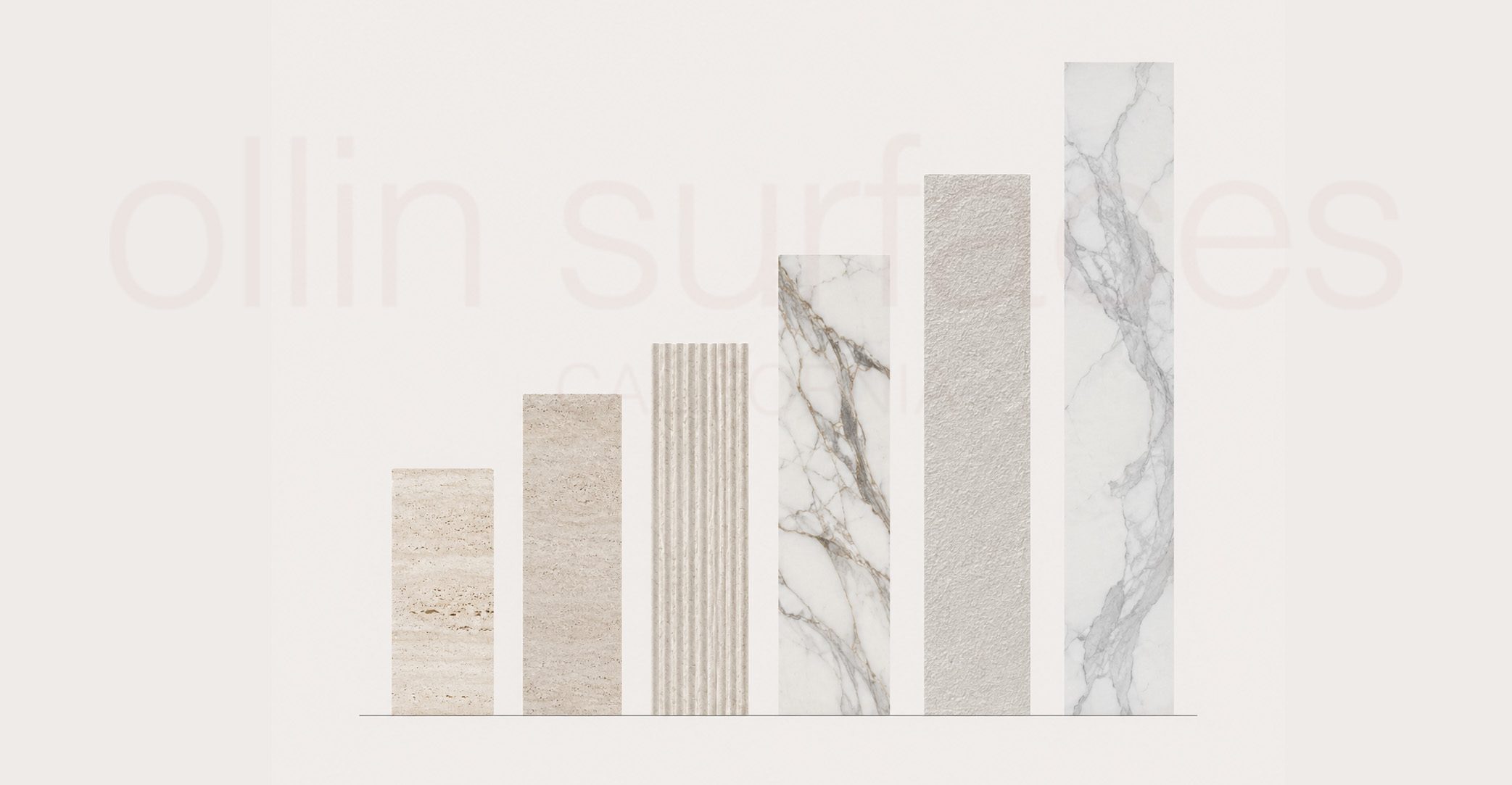
Observed in the yard, Santa Ana · Hand-selected before it shipped
Every slab we sell passes through the yard in Santa Ana. It comes off the container, photographed and handled, and then it leaves. That is a narrow view of the market but an honest one — not what we think is coming, but what actually went out the door.
Three shifts ran through the first half of the year — one in color, one in pattern, one in surface. Each has a material answering it, and each of those is one we keep having to restock.
Here is what moved, and where it is landing.
01 Earth
Tones
The color shift · Travertine & Quartzite
Quiet and warm at once — the neutral that stopped being grey.
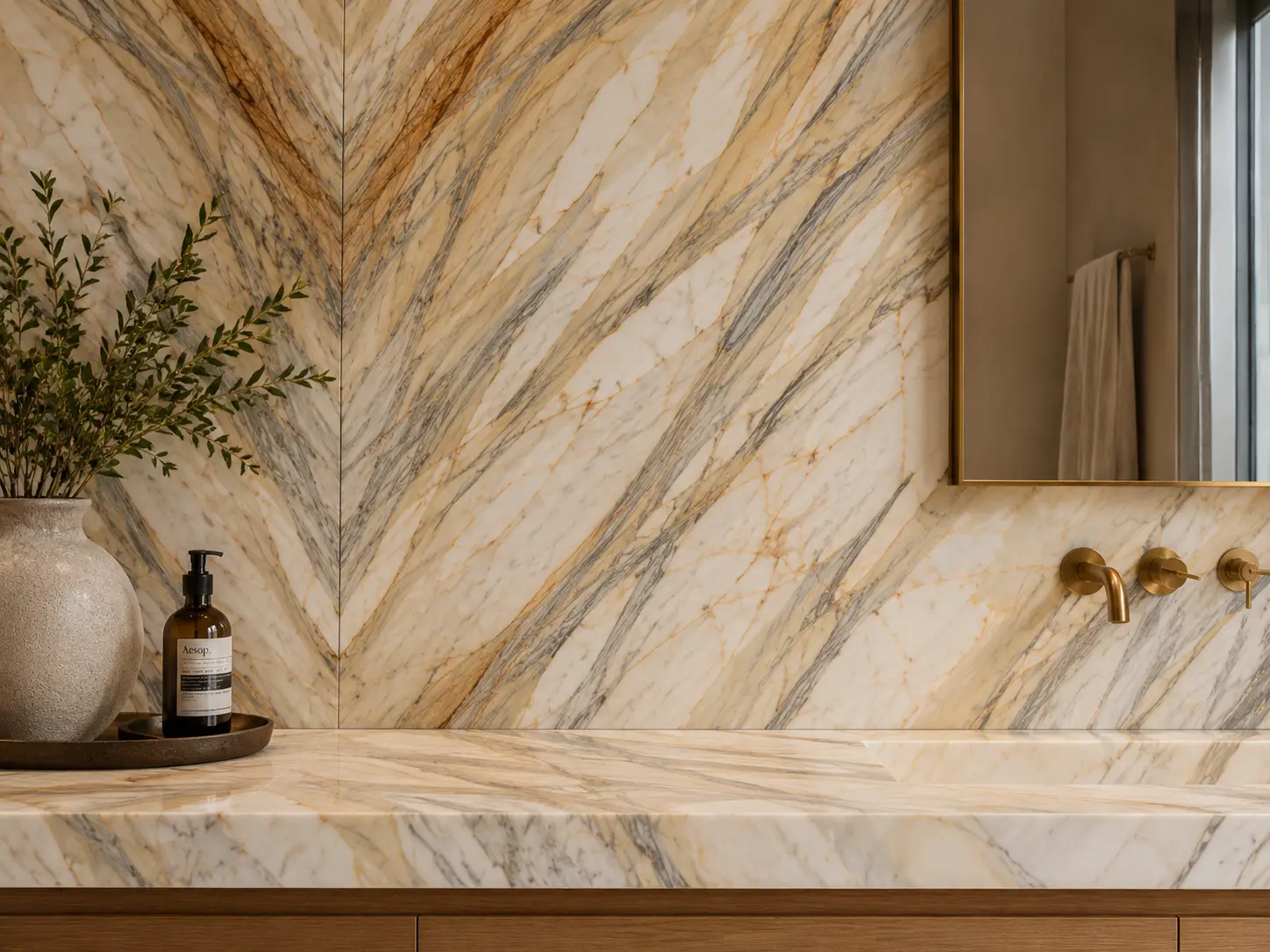
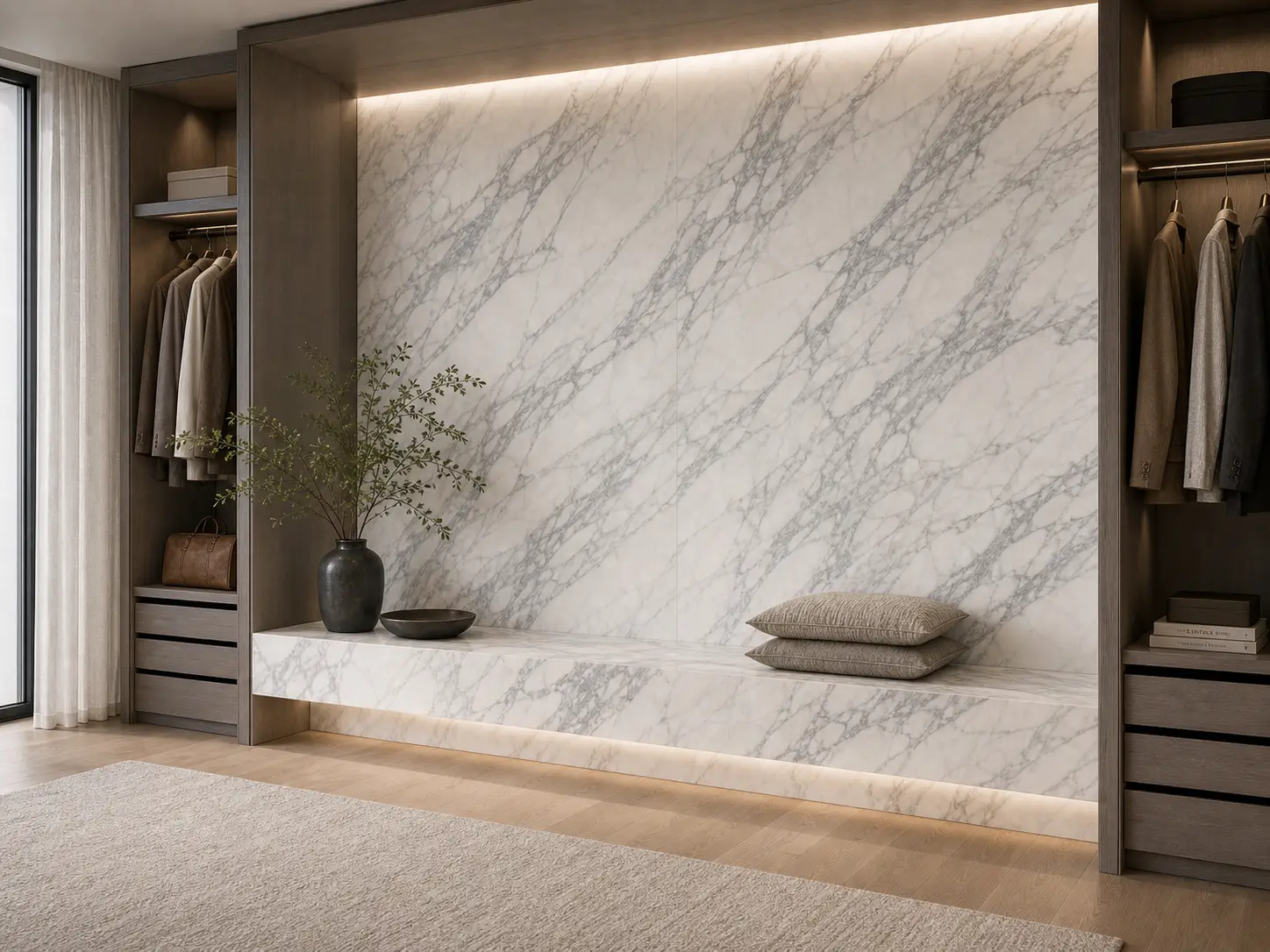
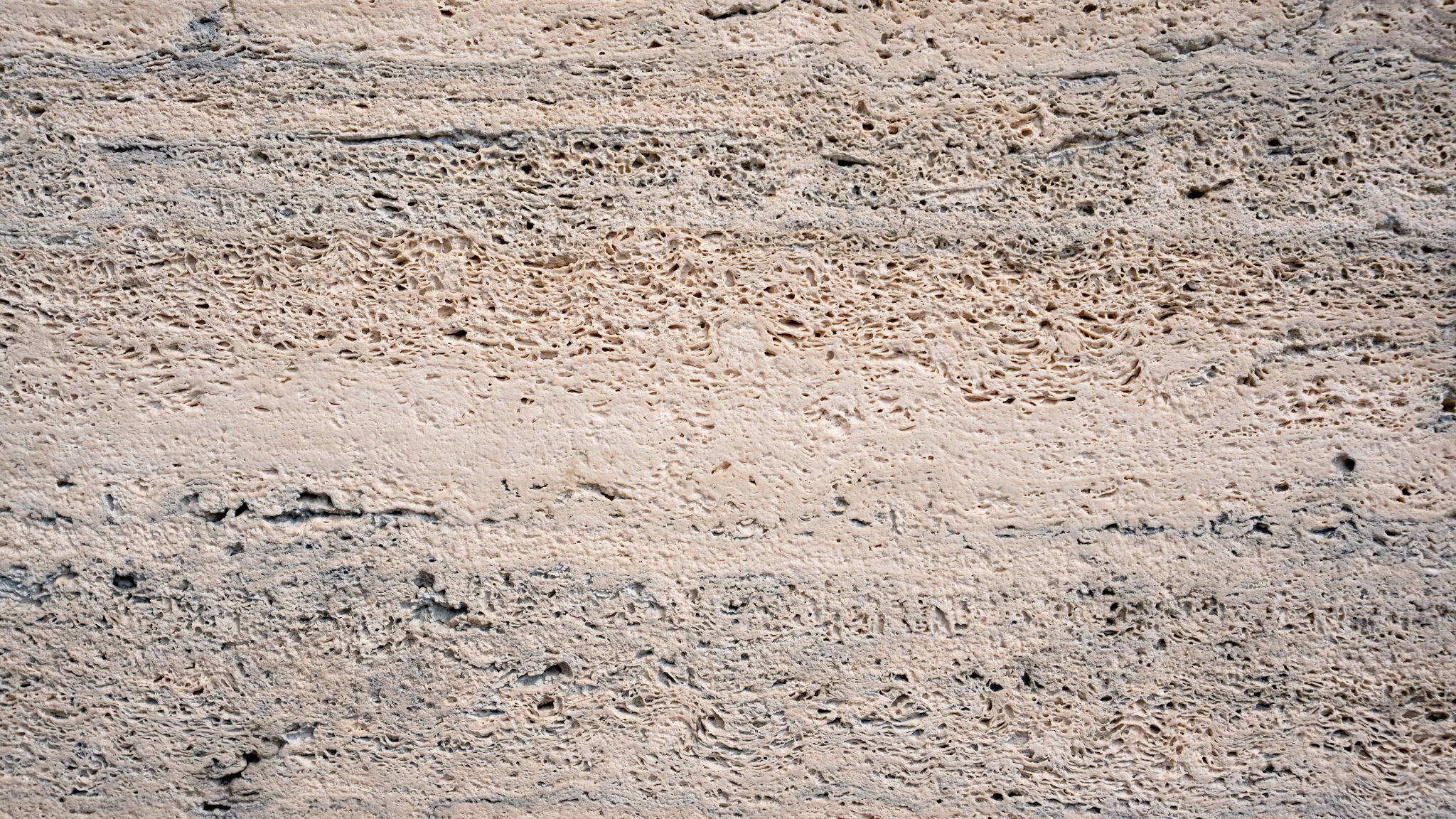
Warm neutrals have kept going warm. The greige that ran the last decade has given ground to walnut and oak pulled darker, and the stone specified against those woods followed. Two materials are absorbing most of that demand and they arrive at the same warmth from opposite directions. Neutral Quartzites, which we have gone back for more often than anything else this year, and Travertines, which we keep restocking a bundle at a time.
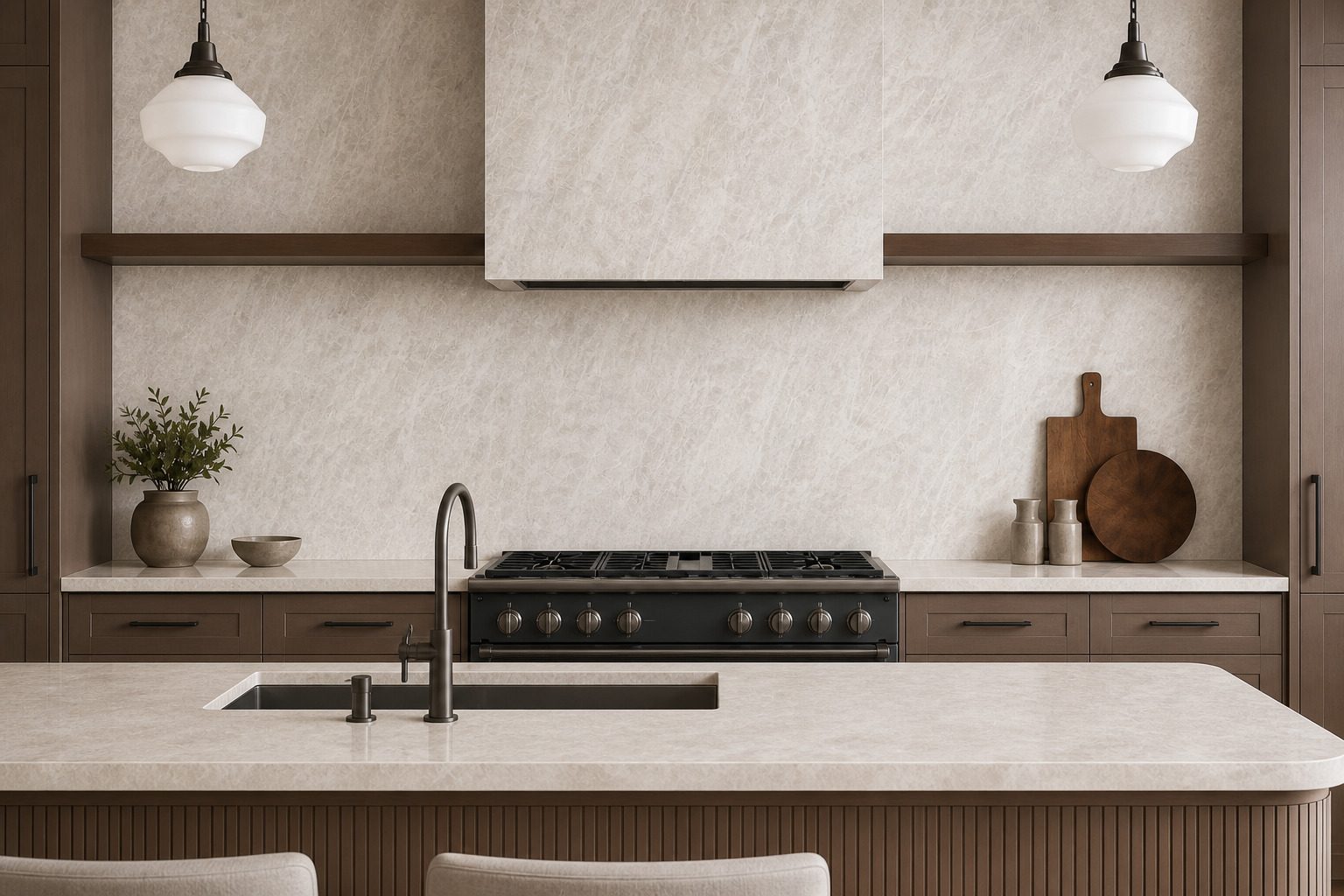
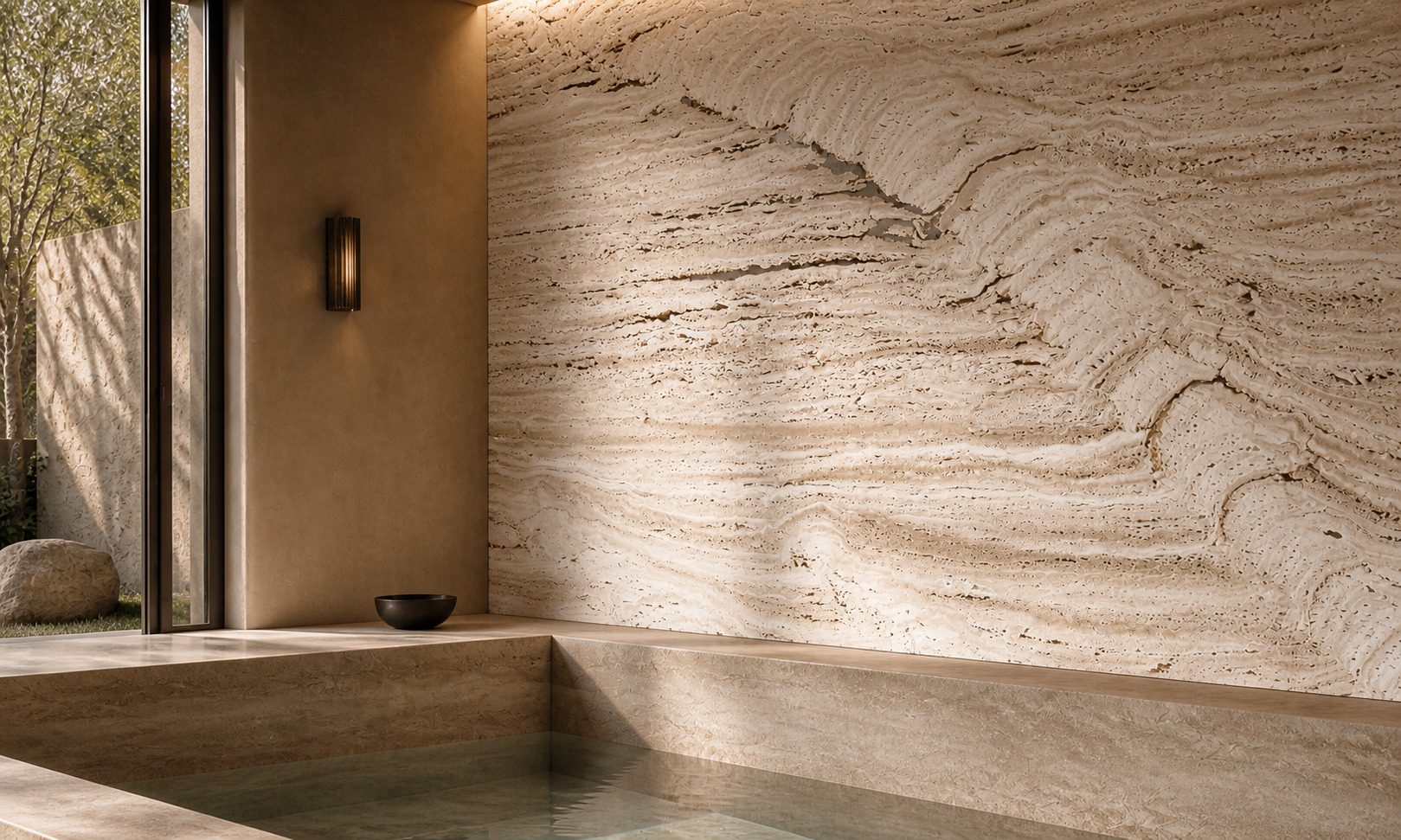
Both pair down rather than up: walnut, tobacco, darker oak, unlacquered brass. Travertine carries a long run better than a short one, because the banding needs distance to make sense. Quartzite goes where travertine cannot — an island that takes lemon, an entry that takes grit. Be aware what you are buying — good deal of what gets sold as quartzite is dolomitic marble, and it will etch like marble.
Featured in this section:
02 Bold
Veining
The pattern shift · Marble
Loud and disciplined at once — movement that organizes a room instead of decorating it.
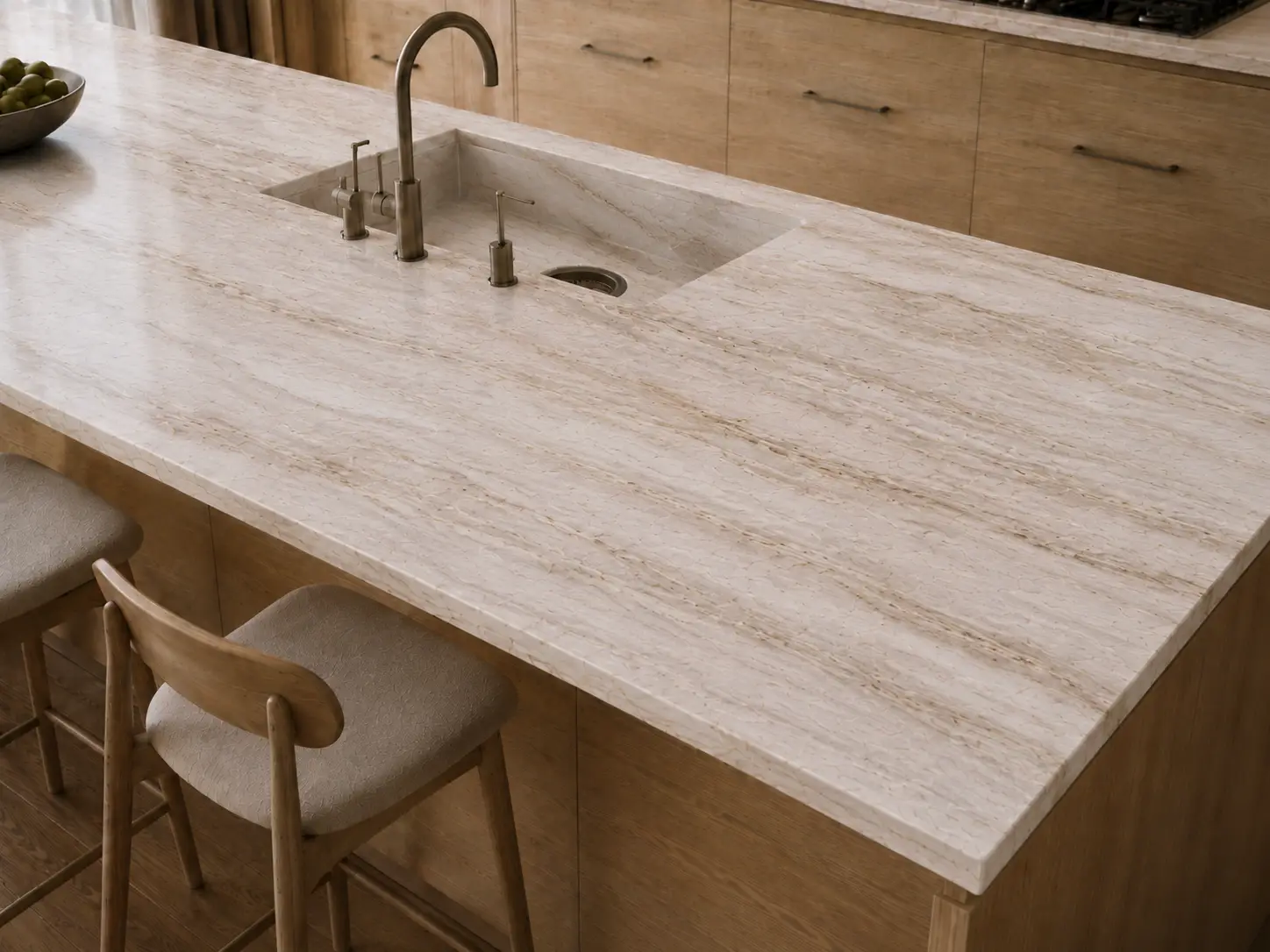
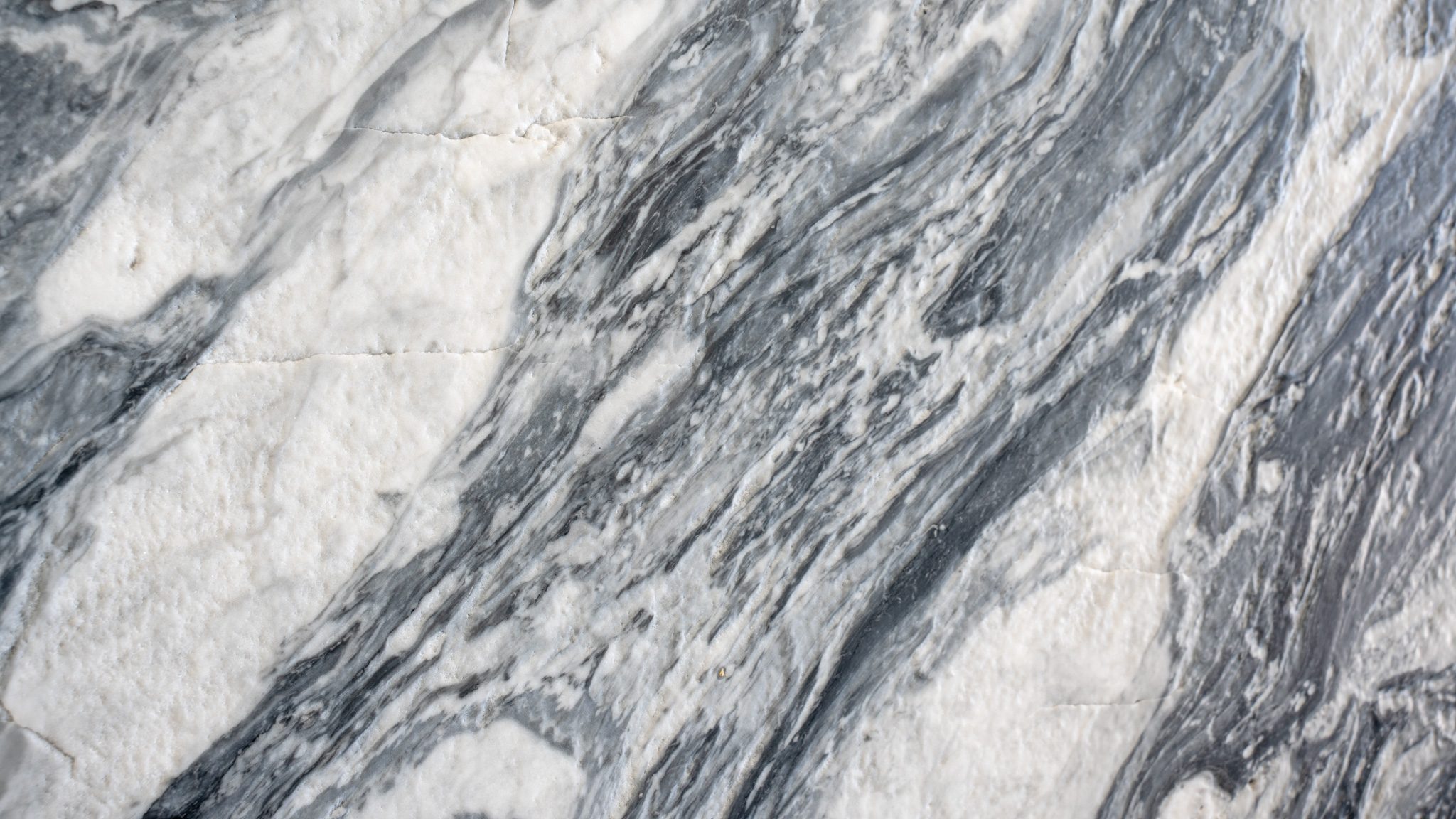
Veining stopped being an accent. It used to run behind a range or across an island and stay there. Now it is asked to be the subject — book-matched up a full elevation, wrapped around a monolith, continued through a waterfall edge so the pattern reads as one gesture rather than three pieces. Bold marble is the category we have replaced most often this year
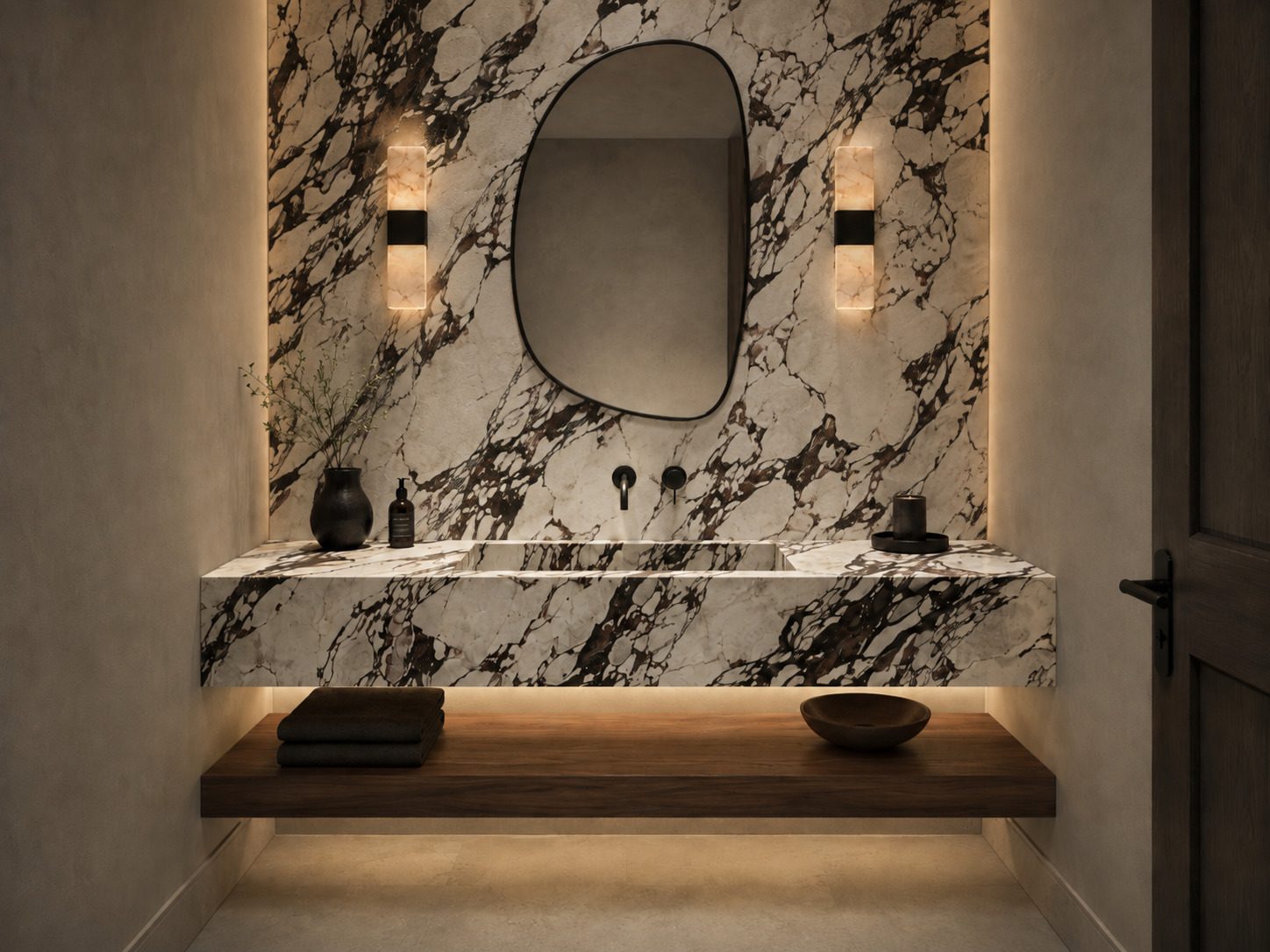
It wants distance and light. A bold marble reads as composition from across a room, so specify it where there is room to stand back. Honed, it gives up some depth and gains a great deal of forgiveness. Polished on a kitchen island it will etch. That is not a defect and it is not a question of price — it is calcite, and it happens to every marble. Specify it where you want a patina, not where you want it to stay new.
Featured in this section:
03 Texture
& Tactility
The surface shift · Across all three
Rough and exact at once — a surface built to be touched rather than looked at.
The third shift is not a material, it is a finish. Polished is losing to honed, matte, textured and fluted, and hard arrises are losing to radiused edges and soft corners. It runs on the same instinct as the earth tones: rooms are being built to be handled. The slabs leaving here with a fluted or textured face are moving faster than the polished version of the same stone.
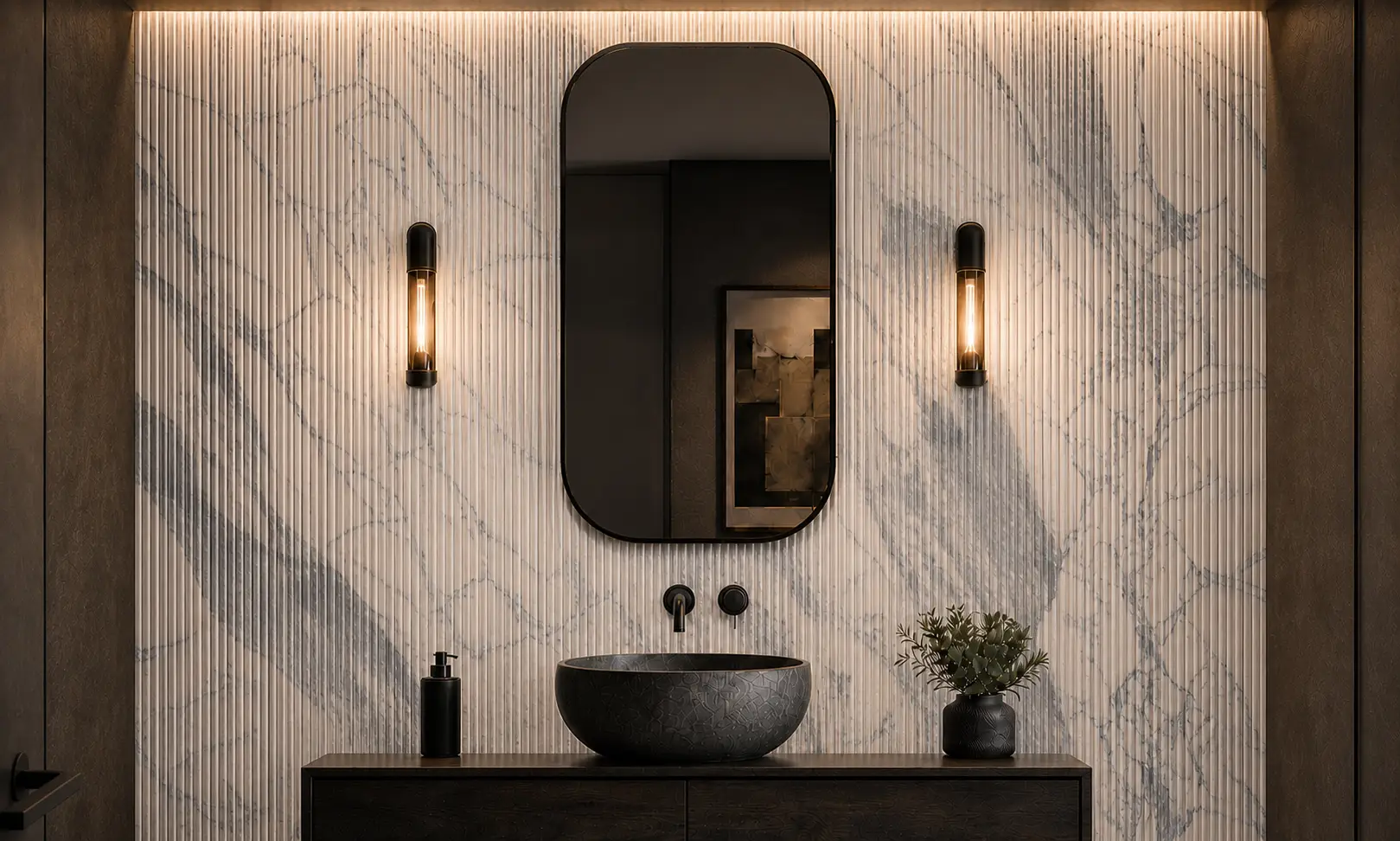
A fluted face turns a slab into a light instrument. The channels catch a raking light and hold shadow, so the surface changes through the day in a way flat polish cannot. Honed does a quieter version of the same thing — it takes the mirror off and lets the material read as material. Under the hand the difference is immediate: polished is cold and closed, honed is dry and open.
Featured in this section:
Earth
Tones
The color shift · Travertine and neutral Quartzite
Quiet and warm at once — the neutral that stopped being grey.
Warm neutrals have kept going warm. The greige that ran the last decade has given ground to walnut and oak pulled darker, and the stone specified against those woods followed. Two materials are absorbing most of that demand and they arrive at the same warmth from opposite directions. Neutral Quartzites, which we have gone back for more often than anything else this year, and Travertines, which we keep restocking a bundle at a time.
Both pair down rather than up: walnut, tobacco, darker oak, unlacquered brass. Travertine carries a long run better than a short one, because the banding needs distance to make sense. Quartzite goes where travertine cannot — an island that takes lemon, an entry that takes grit. Be aware what you are buying — good deal of what gets sold as quartzite is dolomitic marble, and it will etch like marble.
Featured in this section:
Bold
Veining
The pattern shift · Marble
Loud and disciplined at once — movement that organizes a room instead of decorating it.
Veining stopped being an accent. It used to run behind a range or across an island and stay there. Now it is asked to be the subject — book-matched up a full elevation, wrapped around a monolith, continued through a waterfall edge so the pattern reads as one gesture rather than three pieces. Bold marble is the category we have replaced most often this year.
It wants distance and light. A bold marble reads as composition from across a room, so specify it where there is room to stand back. Honed, it gives up some depth and gains a great deal of forgiveness. Polished on a kitchen island it will etch. That is not a defect and it is not a question of price — it is calcite, and it happens to every marble. Specify it where you want a patina, not where you want it to stay new.
Featured in this section:
Texture
& Tactility
The surface shift · Across all three
Rough and exact at once — a surface built to be touched rather than looked at.
The third shift is not a material, it is a finish. Polished is losing to honed, matte, textured and fluted, and hard arrises are losing to radiused edges and soft corners. It runs on the same instinct as the earth tones: rooms are being built to be handled. The slabs leaving here with a fluted or textured face are moving faster than the polished version of the same stone.
A fluted face turns a slab into a light instrument. The channels catch a raking light and hold shadow, so the surface changes through the day in a way flat polish cannot. Honed does a quieter version of the same thing — it takes the mirror off and lets the material read as material. Under the hand the difference is immediate: polished is cold and closed, honed is dry and open.
Featured in this section: