Beneath The Surface · 2026

Napoleon Black: the look of the rarest marble in France, in a stone you can put in a kitchen

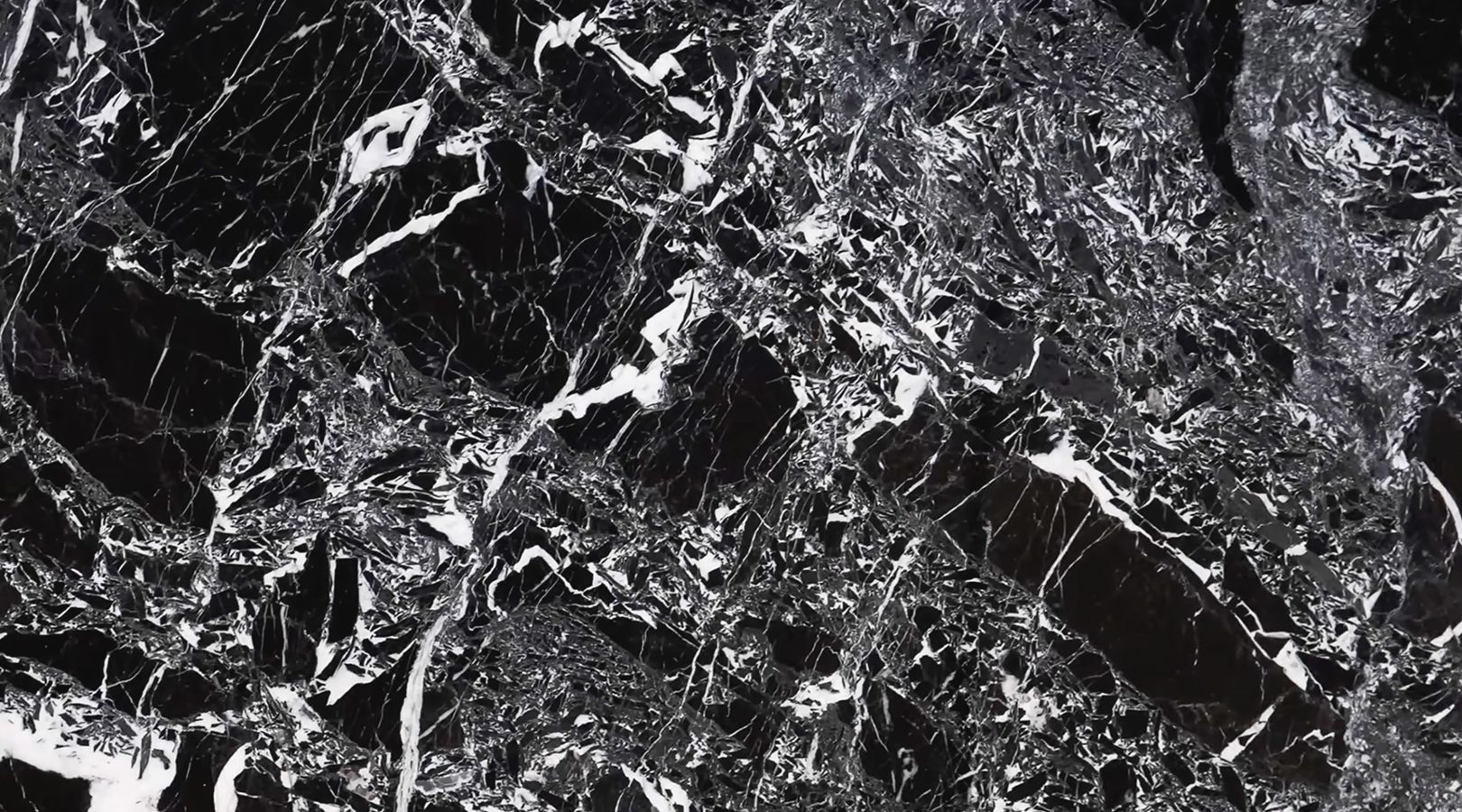
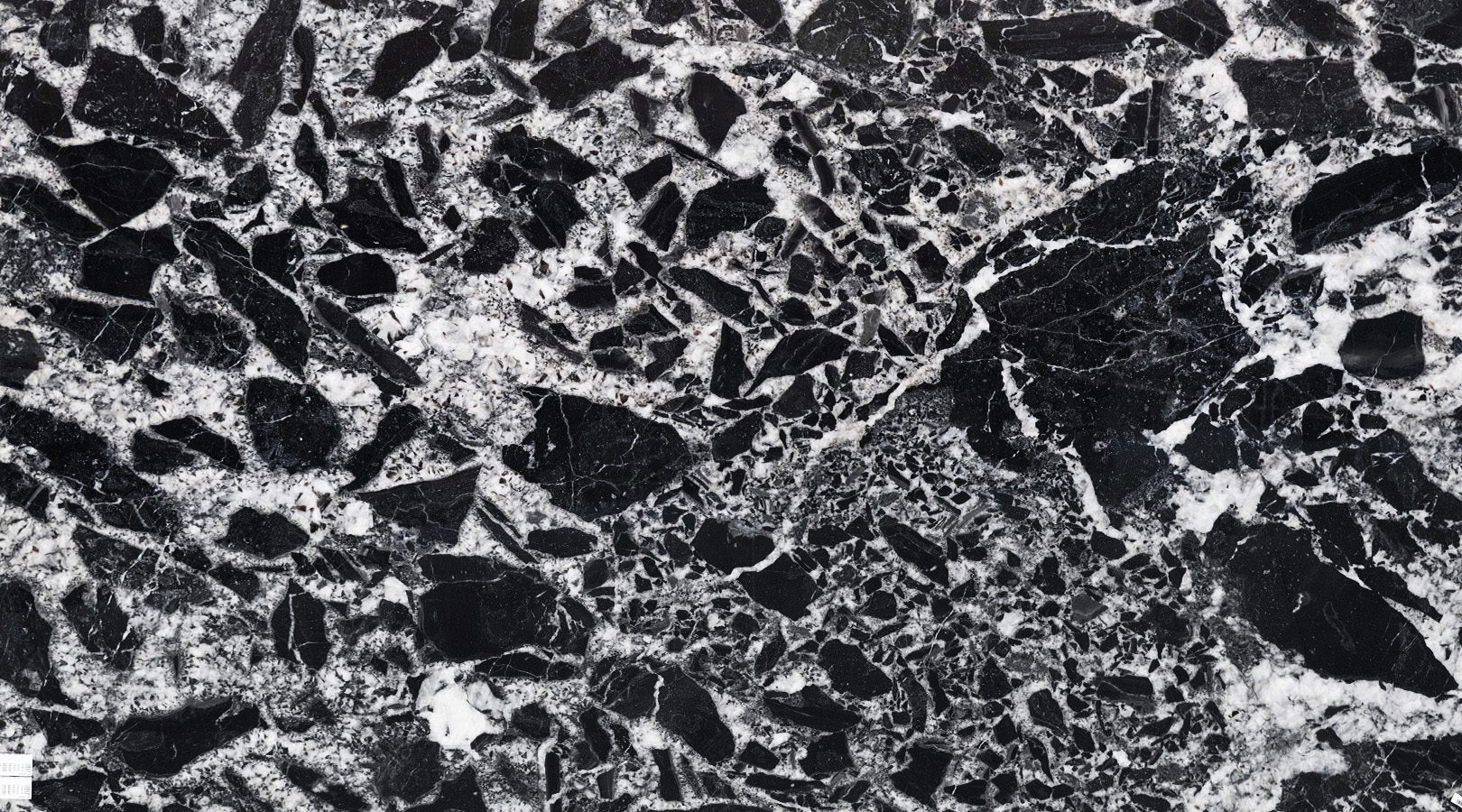
Two slabs of Napoleon Black are leaning against the wall in Santa Ana. They came out of different blocks, and they do not look like the same material.

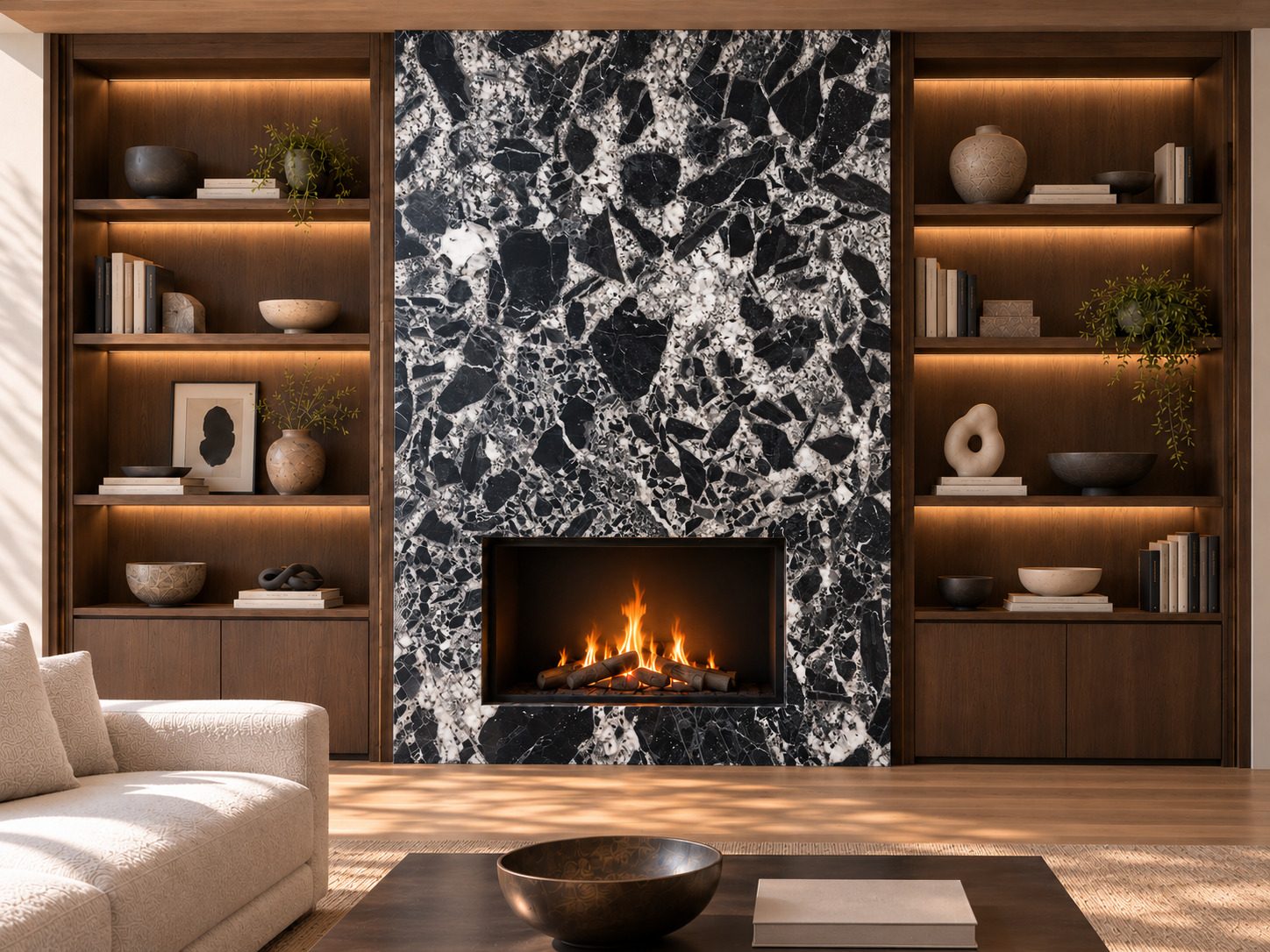
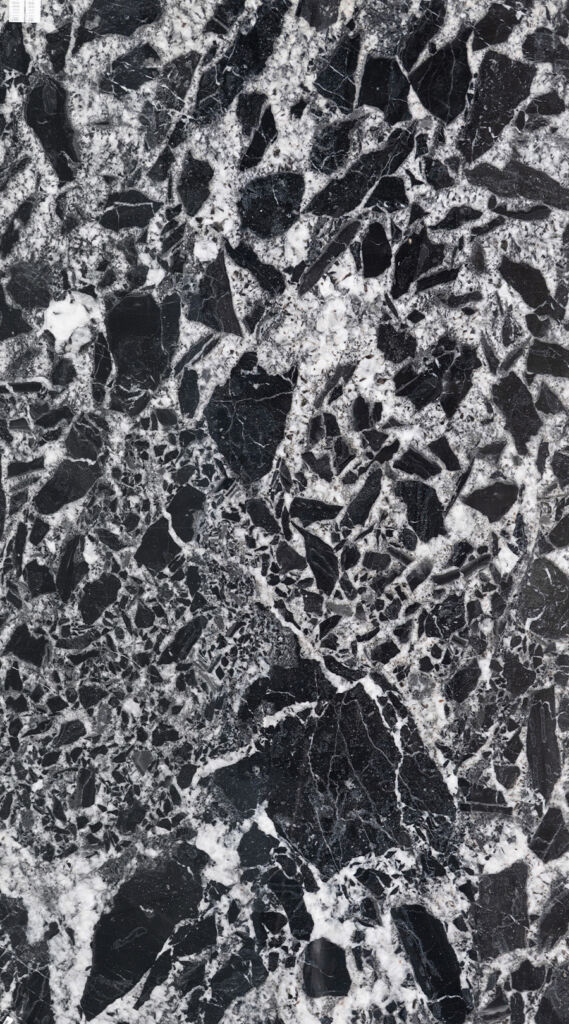
One is polished. It reads almost black — angular dark fragments locked into a thin white web, high contrast, graphic.

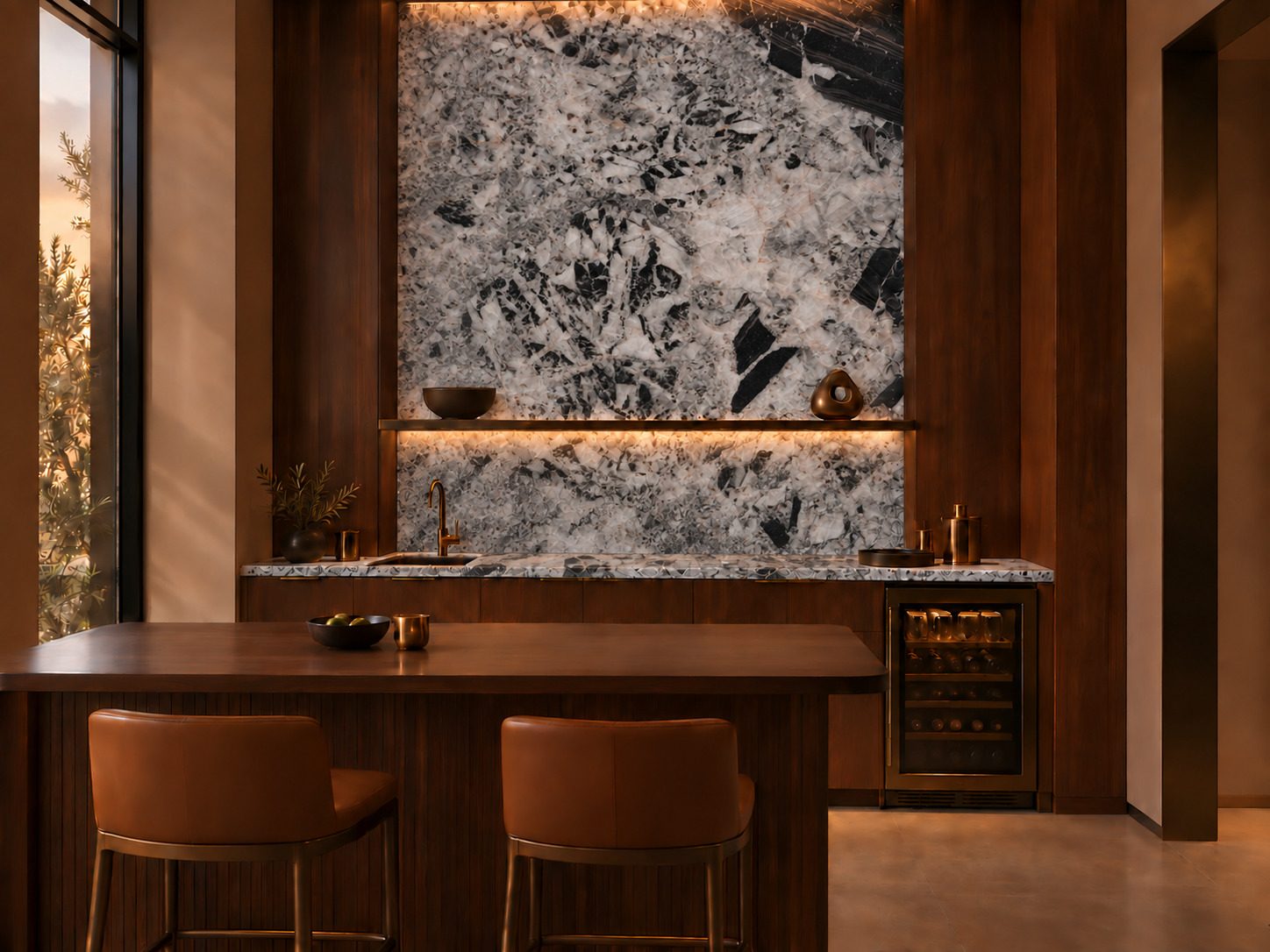
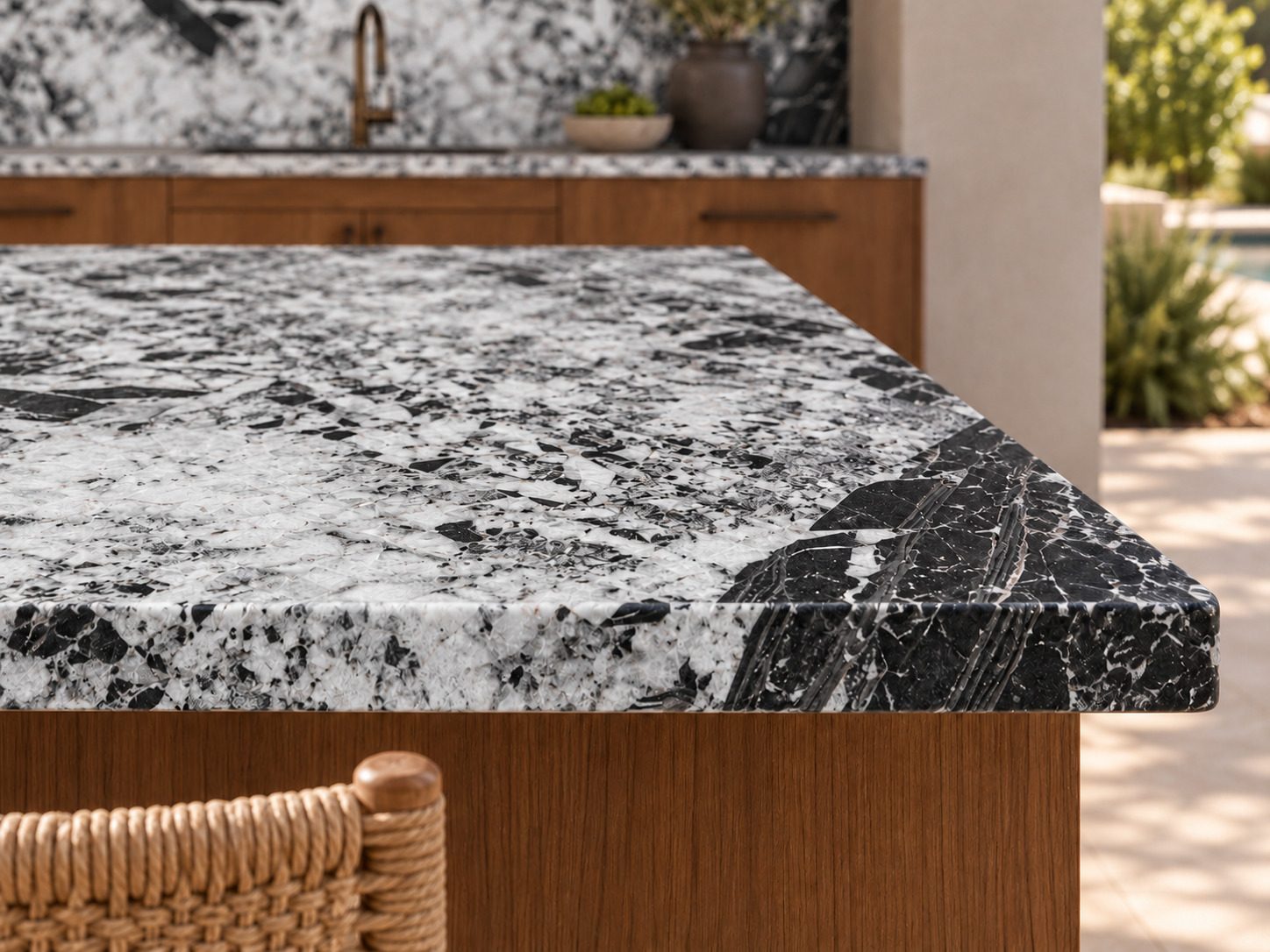
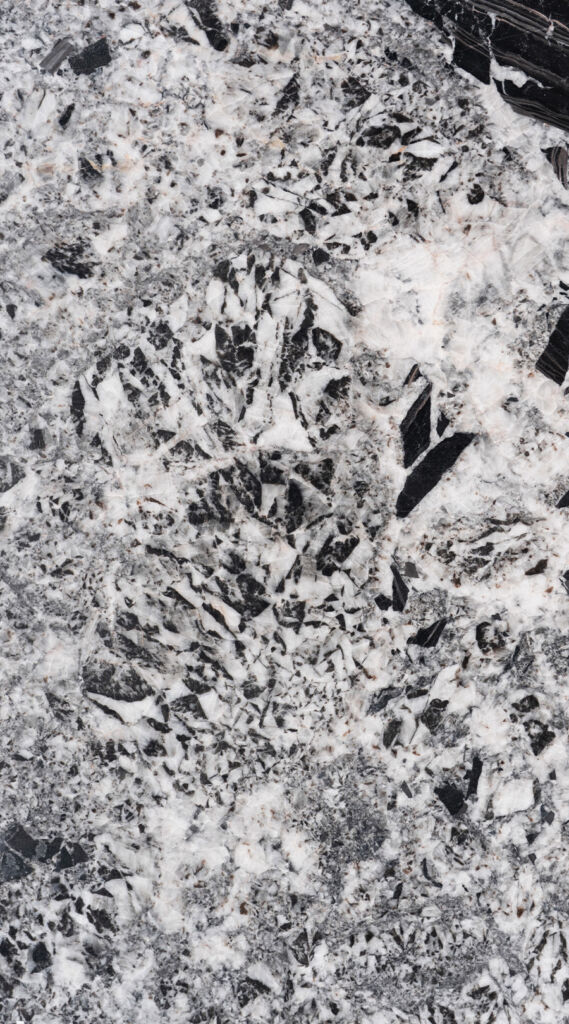
The other is leathered. It reads almost white — a pale crystalline ground with dark fragments scattered through it like islands. Two things are happening at once, and both are worth understanding before you specify this stone.

The pattern is a breccia: rock that was broken apart and then healed by a second mineral filling the gaps. It is one of the most recognizable looks in stone, and for most of history there has been exactly one place to get it.

What Grand Antique is, and why it costs what it does

Grand Antique d’Aubert comes from a single quarry in the French Pyrenees. Business Insider covered it in late 20241, and the numbers are worth repeating.

The stone formed at least 66 million years ago, when colliding tectonic plates shattered a bed of black limestone and white calcite flooded the fractures. The Romans quarried it. It appears in St Mark’s Basilica in Venice and in the tomb of Joseph-Napoléon — which is where the Napoleon association in the trade comes from.

Then the quarry closed, and for roughly seventy years nobody knew exactly where it was. An Italian quarryman named Giorgio Rivieri went looking in 2012, found it by kayak, and reopened it at the end of 2014.

The economics are brutal. His permit allows 1,200 metric tons a year and he deliberately produces less. About half of a block is expected to be lost when it falls. The block the documentary follows weighed 140 tons and yielded 20 percent usable premium material — it was expected to sell for close to $150,000 and went for $65,000.

The reported price is near $2,000 per square meter, around twenty times ordinary Carrara.

That is the stone. One quarry, a finite deposit, deliberately limited output, and most of what comes out of the mountain never reaches a customer.
Why you will see the name on two different rocks

“Napoleon Black” gets used loosely. It turns up on Grand Antique itself, and it turns up on black-and-white breccias from other parts of the world that read the same way from across a room.

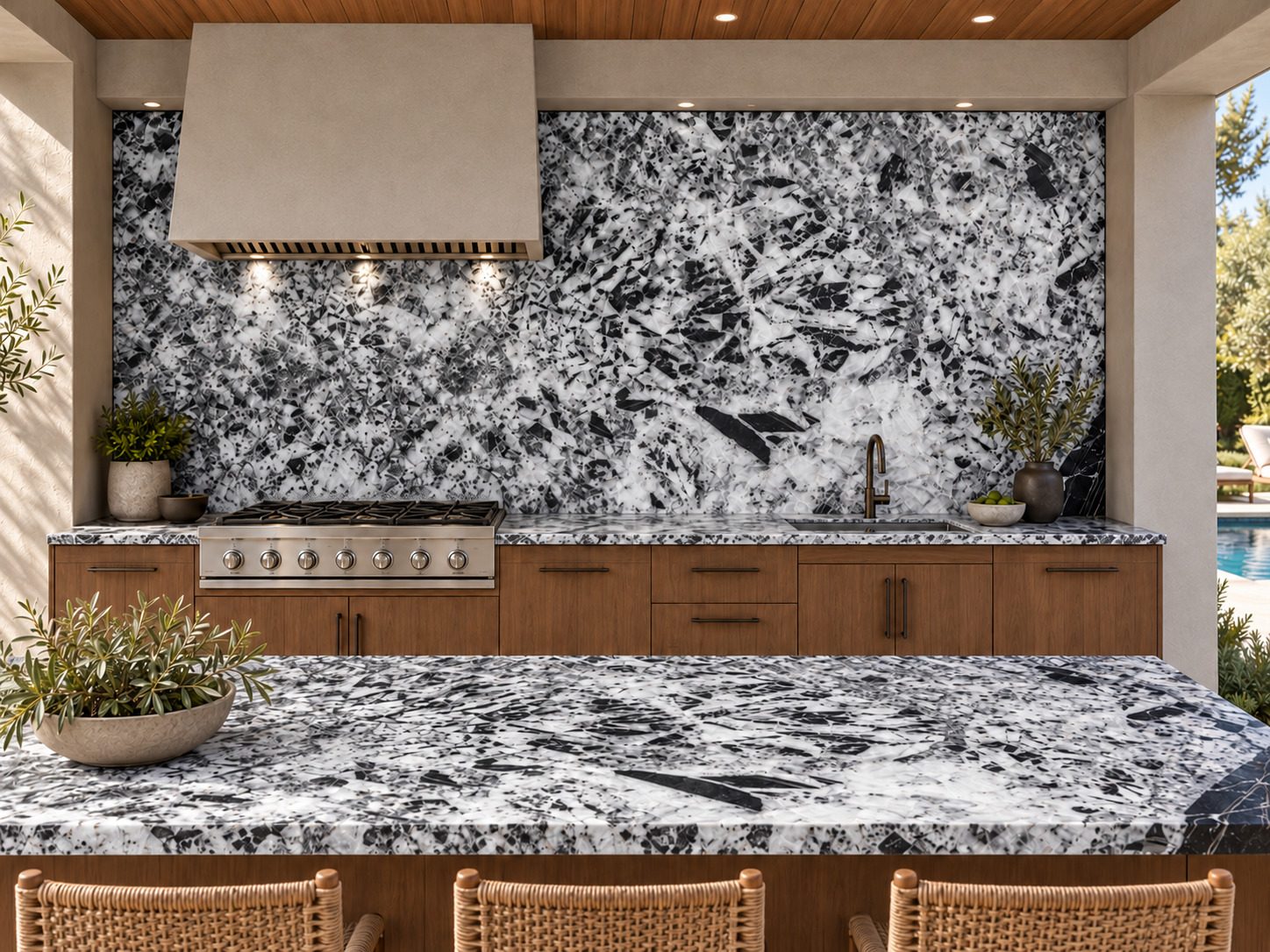
The slabs we hold under that name are Brazilian quartzite. They are not Grand Antique and we would not sell them as such. They are also not a substitute in the sense of a lesser version — they are a different rock that happens to share a visual grammar, and in a kitchen they outperform the original.

The distinction is worth being precise about, because it determines where the material can go.

What a quartzite breccia actually is

Quartzite begins as sandstone. Heat and pressure fuse the quartz grains until the rock recrystallizes into a single dense mass, somewhere around 7 on the Mohs hardness scale.

A quartzite breccia went through one more event. After it hardened, it fractured, and quartz-rich fluid filled the breaks and set. What you are looking at in the slab is the record of that second event: angular fragments of the original dark stone, held in a lighter crystalline matrix.

The visual logic is identical to Grand Antique. The chemistry is close.

Grand Antique is calcite throughout. Carbonates react with acid, which is what etching is: a dull patch where lemon juice has dissolved the polish. Napoleon Black is quartz-dominant, but testing found dolomite in parts of the pattern.

Where it belongs

Kitchens

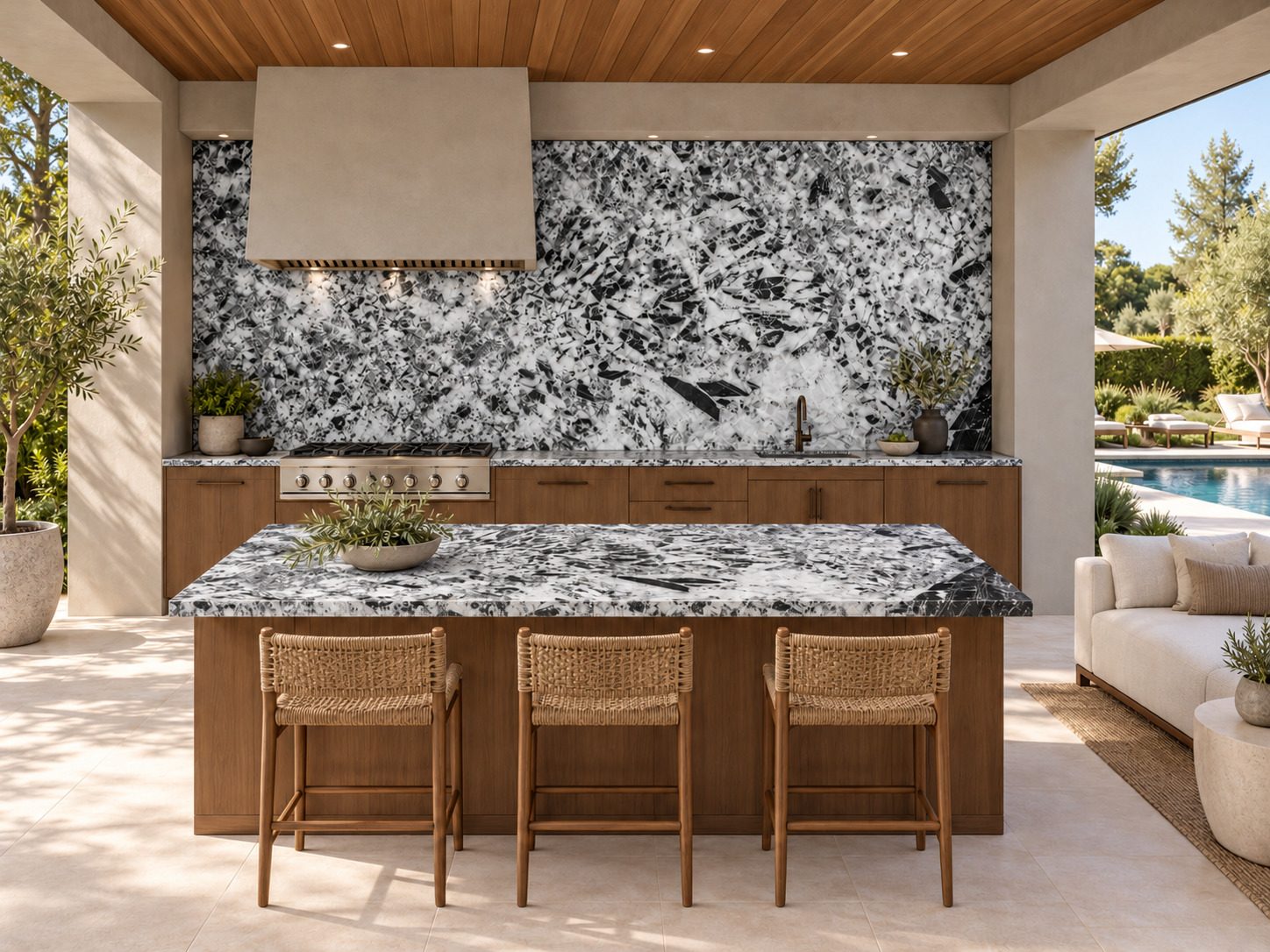
This is the case for the quartzite over the marble. Island tops, perimeter runs, full-height backsplashes. It is far harder than Grand Antique and takes heat and scratching well. Specify it leathered or honed: the carbonate can etch, and matte gives the reaction nothing to show.

Vertical and Sculptural

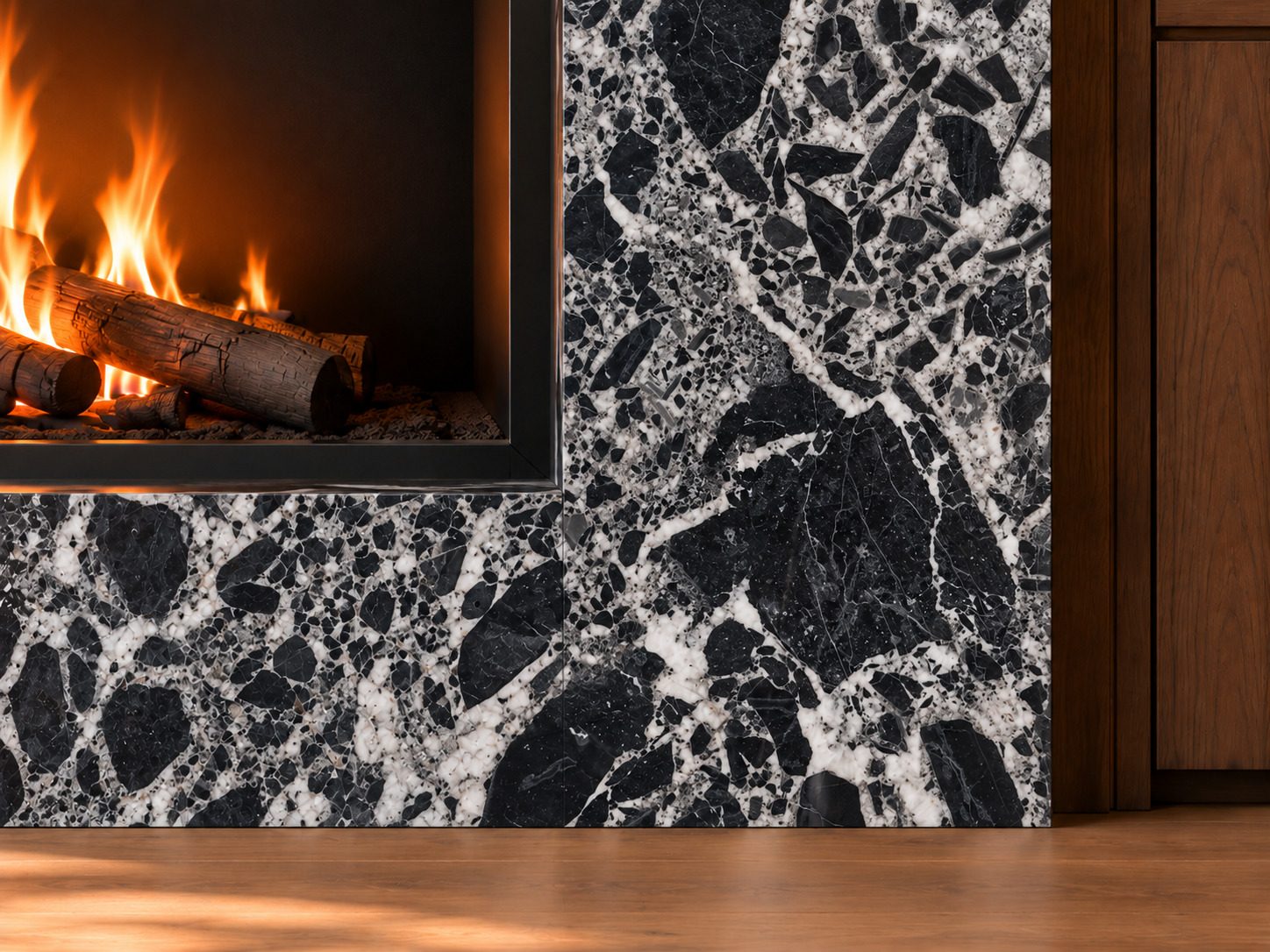
Waterfall edges, fireplace surrounds, bar fronts, reception desks. The breccia pattern suits large uninterrupted planes, where the eye can follow the fracture network across the whole surface.

Scale Matters

The fragments run large. In a small run — a powder room vanity, a narrow backsplash — you get a crop of the pattern rather than the pattern itself, and it can read as random. It carries a long surface far better than a short one.

Living with it

Quartzite asks very little.

Etching. Parts of this stone are carbonate and react to acid. A leathered or honed finish can prevent etching, in effect — there is no shine to lose.

Daily. Warm water and a soft cloth. A pH-neutral stone cleaner if you want one.

Sealing. Sealing is for staining, not etching — different problems, constantly confused. Quartzite varies in porosity from slab to slab.

Keep off it. Vinegar, bleach, ammonia, and any cleaner that does not say pH-neutral. These attack the sealer rather than the stone, but once the sealer is gone the stone absorbs.

Fabrication. Quartzite is hard enough to wear through diamond blades and polishing pads far faster than granite, and a breccia has natural weaknesses along its healed fractures. Ask your fabricator how many quartzite jobs they have done. A good one will not mind the question.

Common Questions

Frequently asked questions

No. Grand Antique is a black limestone breccia from a single quarry in the French Pyrenees. Napoleon Black, as we hold it, is a Brazilian quartzite with a similar black-and-white breccia pattern. The names overlap in the trade, the materials do not.

In parts, yes. It is quartz-dominant, but testing found dolomite in the pattern, and dolomite reacts to acid. No sealer prevents that. Leathered or honed makes it invisible, which is why we specify those for kitchens.

One quarry, a finite deposit, a 1,200 ton annual extraction cap, deliberately restricted output, and roughly half of each block lost on extraction. Business Insider reported a price near $2,000 per square meter, around twenty times Carrara.

Yes. It is far harder than marble and takes heat and scratching well.

Specify leathered or honed for a kitchen — the carbonate can etch, and matte keeps that invisible.

Two reasons. A breccia records how one block broke and healed, so fragment size and the amount of pale matrix vary between blocks. Finish then shifts it further: polished deepens the dark and raises contrast, leathered opens up the pale ground. Always view the actual slab.

Brazil

What we hold

Every slab we sell has been selected by hand, in person, before it shipped. That includes verifying what the material actually is rather than what the
container label says.


What are you working on?

We believe every design deserves the perfect material.

If we don't already have the material you need, we'll source it for you—no compromises, no limits.


Call us today +1 949-778-7429